“What If…?” How Bejeir Brooks Built a Career Around the Next Question
Inspired by the IP firm’s distinctive fly-to-client service approach, The Flight Crew highlights the people who shape the firm and deliver the in-person relationships that define Burris Law.
Bejeir Brooks is a “What if…?” guy. It’s a question that has followed the Burris Law IP attorney throughout his career, repeatedly pushing him to take each opportunity a little further.
What if… he went beyond his undergraduate engineering degree? He earned a master’s degree that deepened his knowledge of materials science that he still uses today.
What if… he made the most of his law school scholarship? He earned not one, but four law degrees while working full-time as an engineer and attorney.
What if… he experienced the patent process from the other side of the desk? He became a patent examiner at the U.S. Patent and Trademark Office.
And What if… he put his engineering background to work before becoming a patent attorney? Along the way, he gained experience across private industry, defense, government, and intellectual property.
Each decision added another perspective. Together, they have shaped Bejeir Brooks into an intellectual property attorney who approaches an invention not simply by asking what it is, or what else it could be — but also, “What if…?”
“I’ve always been a ‘What if…’ guy,” Bejeir said. “What I love most about being a patent attorney is talking with engineers and asking that next question — not just understanding the invention in front of me, but thinking about what else it could become, how else it could be used, and whether there are additional ideas worth protecting. I try to take a holistic, big-picture approach to my clients’ innovations.”

Getting the Most Out of Every Opportunity
Growing up south of Lansing, Michigan, Bejeir initially envisioned a career working with semiconductors and superconductors.
That interest led him to study materials science and engineering at Michigan State University, where he explored metallurgy, ceramics, polymers, and composites. He continued into a master’s program, deepening his expertise in materials and ceramics – knowledge that remains central to his patent practice today.
His drive to make the most of every opportunity continued in law school. Bejeir received a substantial scholarship and looked for ways to build on that investment. The result was a J.D., cum laude, followed by three LL.M. degrees in Intellectual Property, Corporate Law and Finance, and Homeland and National Security Law.
“The ROI on my education was amazing,” he chuckled.
Engineering from the Ground Up
Long before Bejeir was drafting patent applications, he was working directly with the kinds of technologies patent attorneys are later asked to understand on paper.
As a senior engineer with a Department of Defense contractor, Bejeir worked with suppliers on the manufacturing, development, and testing of advanced ceramic materials for ballistic applications. His responsibilities encompassed ceramic, metal, and composite processing and testing, armor and other survivability systems, and eventually leading teams and overseeing budgets, and workforce planning.
Later, as a senior engineer working with the U.S. Army, he gained additional experience with project management, engineering oversight, and IP strategy. Bejeir describes his earlier work as “cradle-to-grave engineering” — an approach that considers every stage of a product’s lifecycle, from design and manufacturing to testing, improvement, use, and eventual disposal.
Seeing Patents from the Other Side
As a former USPTO patent examiner, Bejeir reviewed patent applications, conducted prior art searches, and evaluated claims for compliance with USPTO requirements. That experience gave him a behind-the-scenes view of the examination process and valuable insight into the challenges of patent prosecution – a perspective he now navigates for Burris Law clients.
Bejeir’s Burris Law practice focuses heavily on materials science, mechanical and electromechanical technologies, with particular experience in ceramics, semiconductors, metallurgy, aerospace materials, and related technologies.
Bejeir believes Burris Law clients are best served when their matters are handled by professionals whose technical backgrounds best align with the inventions. When a matter falls more squarely within a colleague’s expertise, he has no hesitation about bringing that person in.
“That’s one of the things that makes Burris Law special,” Bejeir said. “We have attorneys and patent agents across different engineering and scientific disciplines. At the end of the day, the client gets that collective talent and the right people for the job.”
One of Bejeir’s more memorable patent matters at Burris Law involved an application facing particularly challenging prior art. Other attorneys had worked through the record without finding a clear path forward. Bejeir dug into the patent and the cited references and eventually found an opening in a single word.
“We had a single word in our patent that we could use to get around everything else,” he recalled. That lone piece of language provided the opening the team needed to distinguish the invention and advance the matter.
It is a fitting illustration of how Bejeir approaches patent work: understand the broader landscape first, then recognize when the smallest detail deserves your full attention.
“What If…” You Just Cook It Yourself?
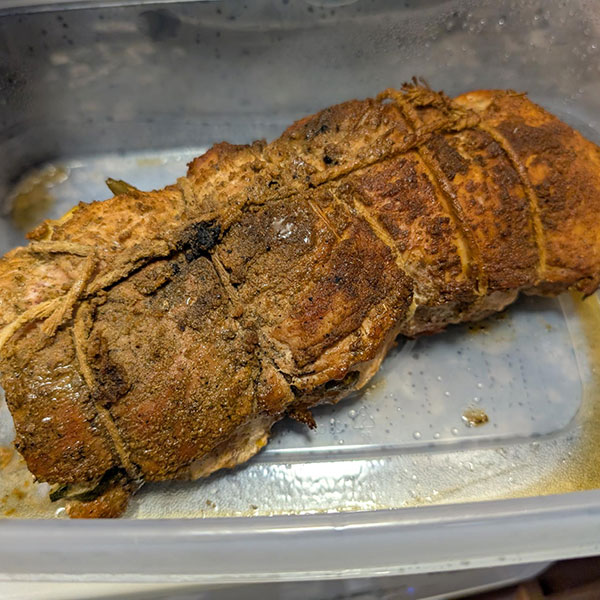
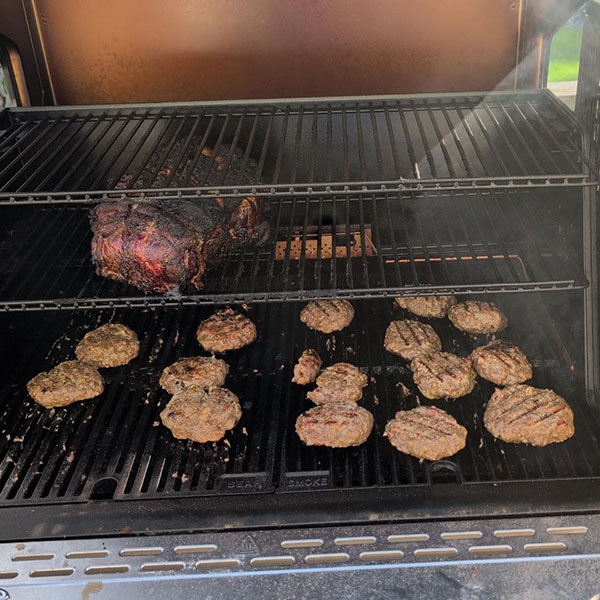
The “What if” mindset follows him outside the office, too. Bejeir has been cooking since middle school. Today, he’s particularly enthusiastic about grilling and smoking, preparing everything from ribs, pork shoulder, steaks, and burgers to seasoned chicken and roasted vegetables.
“I’m a charcoal man,” Bejeir said. “If I can use charcoal and toss some hardwood in there, that’s what I prefer as it gives you a better flavor.”
Even cooking comes with a bit of Bejeir’s return-on-investment philosophy. If he can learn to make something at home nearly as well as he can get it at a restaurant, he figures he might as well learn how to make it himself.
It is, in its own way, another “What if…?” — one more question from someone who has built a career, an education, and apparently a pretty good dinner by rarely stopping at the first answer.